
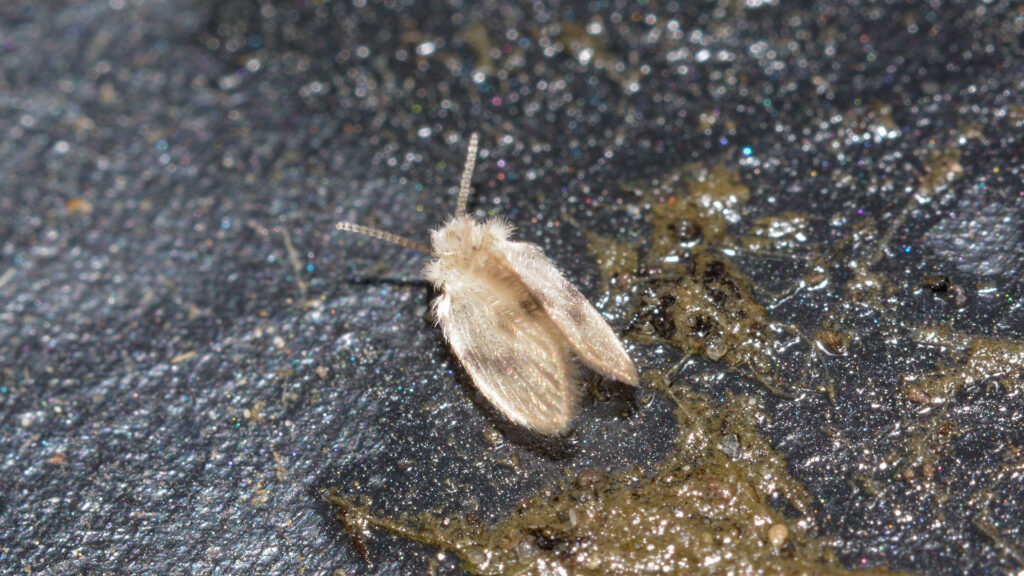
Drain flies are small, fuzzy flies that breed in the film built up inside drains: layers of soap residue, hair, and grease. Florida’s heat speeds their development, so populations rebuild quickly after a single cleaning. Getting rid of them requires removing the film from inside the drain. Killing adult flies without clearing the source only buys a few days.
You notice small, fuzzy flies hovering near the bathroom sink or gathering around the shower drain. They’re slow-moving and easy to swat, but a day later, there are more of them. The problem isn’t on the surface. It’s inside the drain. Florida’s year-round heat and humidity make our pipes a near-perfect breeding ground for drain flies.
They’re sometimes confused with no-see-ums, but the fuzzy, moth-like wings and the drain location make them easy to distinguish.
Where Do Drain Flies Come From?
The breeding source is organic film: a layer of soap residue, hair, grease, and decomposing matter that builds up inside pipes, slow-moving drains, and standing water.
Drain fly larvae (the worm-like young that live in the drain) live in that film. The adults emerge, lay eggs in the same material, and the cycle runs on its own. Killing the adults you see does nothing to the source. More will emerge from the same film within days.
In homes, drain flies most often appear in bathroom drains, kitchen sinks, and floor drains in laundry rooms or garages. Any drain with a drain trap that rarely gets used is a candidate. The organic film builds up undisturbed in low-traffic spots, and that’s exactly the condition drain fly larvae need.
An unused floor drain in a vacation home can become a full breeding source in a matter of weeks.
Why Florida Drains Breed Them Fast
In most climates, drain fly development from egg to adult takes one to three weeks. Florida’s heat compresses that to the short end. Warm pipes speed larval development. High humidity keeps drain traps moist year-round, so conditions stay ideal even in January.
Drain fly problems in Florida don’t have an off-season. Homeowners who clear a drain in October and don’t address the buildup inside the pipe will face the same problem again by December. In cooler climates, a drop in temperature will slow breeding and give homeowners a window to clear the source.
Florida homeowners don’t get that window. The source has to be cleared directly.
Drain flies are one of several Brevard County summertime bugs that build fast indoors before most homeowners notice.
How to Get Rid of Drain Flies
Getting rid of drain flies means removing the organic film in which the larvae live. Surface sprays don’t reach it. Fly traps catch adults but don’t stop more from emerging. The drain itself needs to be broken down and flushed.
A stiff drain brush and boiling water, followed by a biological drain cleaner applied over several consecutive days, will clear mild buildup in most drains. The key word is consecutive. Skipping days lets the film recover before it’s fully cleared.
For bathroom drains specifically, most of the film sits right at the drain entry: on the underside of the cap and the first few inches of pipe. Scrubbing that section manually before flushing gives the biological cleaner a better surface to work on. Drain fly larvae are resilient. A single flush rarely clears a well-established film.
Does Bleach Kill Drain Flies?
Bleach is one of the most common DIY attempts, and it rarely works. Bleach poured into a drain passes through too quickly to kill larvae embedded in the organic film on pipe walls.
Repeated use is also corrosive to older pipes. A diluted bleach solution kills drain flies on direct contact, but it doesn’t dissolve the film the larvae are living in. The film stays, the eggs stay, and the next generation hatches on schedule.
Biological drain cleaners work differently. They contain bacteria and enzymes that break down organic matter rather than burning through it. Applied consistently over several days, they digest the film that bleach flows past. They’re slower than bleach. That’s the tradeoff. They’re also the only option that addresses the actual breeding environment rather than flowing straight past it.
When DIY Drain Fly Fixes Don’t Work
Deep plumbing, unreachable pipe sections, and multiple-drain infestations are where DIY treatment loses ground. The bigger problem is when the source isn’t a regular drain at all. air conditioner drain lines, leaking drain traps inside walls, and standing water in utility areas all breed drain flies without being obvious.
You clear the drain, the flies disappear for a week or two, then they’re back. The primary source wasn’t fully cleared, or there’s a second source elsewhere in the home. Treating one drain while another is actively breeding just moves the population around.
A second source doesn’t have to be far away. The bathroom drain and the guest bathroom drain two doors down can both be active at the same time.
How Do Pros Treat Drain Fly Larvae?
Floor drains, air conditioner drain lines, utility sinks, and drains that aren’t used much are all checked before treatment starts. Missing one active source causes the infestation to return. Once every source is mapped, commercial-grade biological gel treatments go in: products that stick to pipe walls and break down film over several days rather than flushing through.
Roaches also use floor drains to get inside. Clearing the film that drain flies breed in blocks the route for both pests.
For severe cases or hard-to-reach pipe sections, professional drain cleaning clears the way before biological treatment can work. Biological gel applied to a drain packed with years of buildup won’t penetrate far enough to make a difference.
Our pest control services include a full drain assessment to locate every source of the infestation before treatment starts, so the infestation doesn’t return two weeks after we leave.
Call Orange Pest for Drain Fly Help
If drain flies keep coming back after you’ve cleaned the drain, the source hasn’t been fully addressed. We locate every breeding point, treat the source of the film, and don’t leave until the cycle is broken.
Call us at 321-340-3205 to schedule a drain fly assessment. We proudly serve homeowners across: