
Black widow spider identification requires knowing specific visual markers that separate these venomous spiders from harmless look-alikes found throughout Florida homes. Many homeowners mistake other big black spiders for black widows, leading to unnecessary panic or dangerous misidentification that delays proper treatment.
Learning to recognize their distinctive markings, egg sacs, and nesting behavior helps you respond appropriately when you encounter these spiders on your property.
Red Hourglass & Black Markings
Female black widows display glossy black bodies with a distinctive red or orange hourglass shape on their underside, making them one of the most recognizable venomous spiders in North America.
This black and red spider marking appears as two connected triangles forming an hourglass, though some individuals show incomplete hourglasses or separated triangles. Body size reaches about 1.5 inches, including legs, with females significantly larger and more robust than males.
Some black widows have spots, sometimes red or white, along their back, particularly younger specimens that haven’t fully matured into solid black coloration. Black widow spider on spider web patterns help with identification too, as widows create messy, irregular webs without the organized spiral patterns of garden spiders.
Male vs Female Black Widow Differences
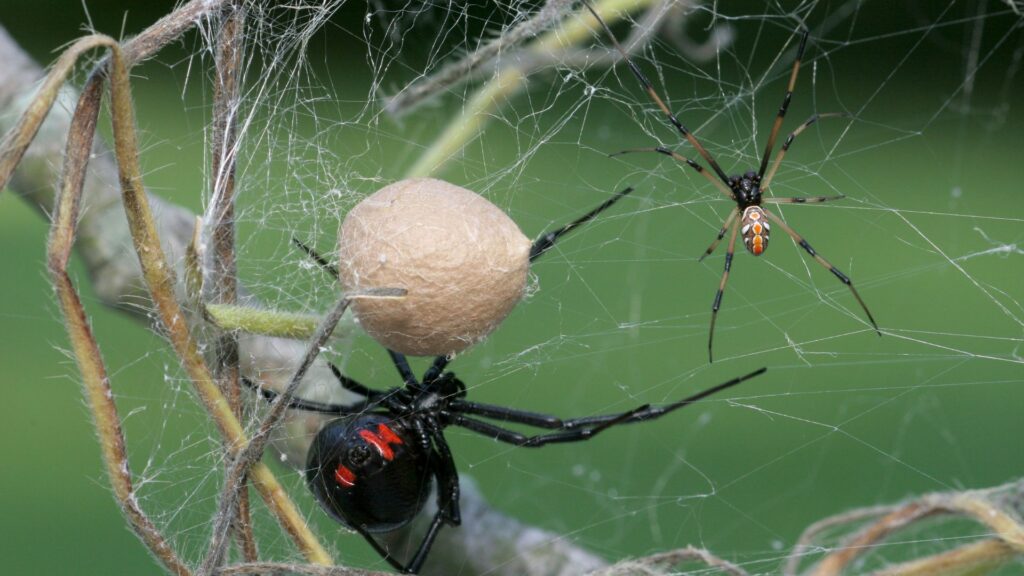
Black widow male and female spiders look so different that most people think they’re separate species. Females appear in every identification guide because their size and venom create real danger.
Size creates the most obvious dissimilarity. Females measure about half an inch long with thick, round bodies. Males stay half that size with thin frames built for quick movement.
Young widows add more confusion. Both sexes start life looking similar with lighter colors and bold white, yellow, and red patterns. Females gradually turn black through each molt until they reach adult coloring.
Color patterns show even bigger contrasts. Females develop their glossy black bodies with red hourglass markings. Males keep tan or brown coloring their entire lives. Male markings appear as stripes and spots along their sides and backs, helping them hide in bark and dead leaves.
Males behave completely differently, too. Once they mature, males stop building webs and wander constantly searching for females. You won’t find males in the tangled webs you associate with black widows, as those belong only to females protecting their territory.
Males also rarely bite people. Their smaller fangs can’t easily break human skin, and their venom glands produce almost no toxin.
Where Black Widows Lay Eggs
Black widow spider nest sites concentrate in protected areas where females feel secure enough to reproduce and guard their offspring.
Widows prefer building webs in dark corners of garages, underneath outdoor furniture, inside unused storage boxes, beneath decks, and around foundation vents where air flow remains minimal. Florida’s poisonous spiders, including black widows, seek out spaces that stay dry and undisturbed for extended periods.
Females produce egg sacs throughout warm months, with peak reproduction happening between late spring and early fall. Each female creates multiple egg sacs during her lifetime, spacing them several weeks apart as she continues mating and producing offspring.
Black widow spider egg sac production requires significant energy, so females stay close to reliable food sources where they catch enough prey to sustain reproduction.
Widow Egg Sac Identification
Black widow spider egg sac characteristics help you distinguish widow eggs from other spider species sharing your property.
Widow egg sacs appear smooth, spherical, and cream or tan colored, measuring roughly the size of a marble at 12-15mm in diameter. Females suspend these sacs within their webs, often clustering multiple sacs together in particularly safe web sections.
Black vs brown widow egg sac differences matter when identifying which species invaded your space. Brown widow egg sacs display distinctive spikes covering their surface, looking like tiny sea mines, while black widow sacs remain completely smooth. Brown widows produce white to tan sacs with more pronounced spiky projections, making them easily distinguishable once you know what features to check.
Each sac contains 200-400 eggs that hatch within two to four weeks, depending on temperature. Newborn black widow spiders emerge white or tan colored and gradually darken through successive molts over several months. Spiderlings remain near the egg sac initially before dispersing via ballooning, releasing silk threads that catch wind currents and carry them to new locations.
How Dangerous Are Black Widows?
Black widows rank among the most toxic spider species in North America, though bites rarely cause death in healthy adults who receive prompt medical attention.
Widow venom contains neurotoxins that disrupt nerve function, causing severe muscle pain, cramping, nausea, and difficulty breathing within hours of envenomation. Recognizing bite symptoms and seeking immediate medical care prevents complications from developing.
Bites typically occur when people accidentally trap spiders against their skin while reaching into dark spaces, putting on shoes stored in garages, or sitting on outdoor furniture where widows built webs underneath. Widows defend themselves only when they feel directly threatened or crushed. Most encounters happen because people don’t see the spider before making contact.
Children, elderly individuals, and people with compromised immune systems face higher risks from widow bites since their bodies struggle more with venom effects. Even healthy adults experience significant pain and discomfort lasting several days to weeks without proper treatment.
Antivenom exists for severe cases, though doctors reserve it for patients showing serious symptoms since the antivenom itself carries risks of allergic reactions.
Professional Spider Removal
To get rid of black widow spiders effectively, it requires more than just killing individual spiders you spot around your property.
Professional spider control eliminates current populations while addressing conditions that attract widows to your home in the first place. Spider exterminator services include thorough property inspections, identifying all web locations, egg sacs, and harborage areas where widows hide.
Treatment programs target adult spiders, egg sacs, and spiderlings simultaneously to prevent population rebound after initial applications. Treatments focus on garage corners, foundation perimeters, crawl spaces, storage areas, and outdoor structures where widows establish territories.
Prevention strategies reduce future infestations by sealing entry points around foundation cracks, installing door sweeps, organizing storage areas to eliminate hiding spots, and maintaining regular cleaning schedules in spaces widows prefer. Outdoor lighting modifications help too, since lights attract insects that draw spiders seeking prey.
Contact Orange Pest Control for comprehensive black widow elimination that protects your family from dangerous encounters. Our trained technicians safely remove spiders and egg sacs while implementing long-term prevention strategies tailored to your property’s specific risk factors.