
Bugs that look like bed bugs turn up in Florida homes more often than most people expect, and the panic that follows is usually premature. Several common insects share the same size, color, and shape as bed bugs, and treating for the wrong one wastes time and money while the real problem keeps going. Knowing the difference before you act is what matters.
What Do Bed Bugs Actually Look Like?
What bed bugs look like to the human eye depends on their age and whether they’ve fed recently. Adults are flat, oval, and roughly the size of an apple seed, about 3/16 of an inch long, with a reddish-brown color that deepens after a blood meal. Six legs, short antennae, no wings. After feeding, the body swells and takes on a more elongated shape.
Up close, Bedbugs have horizontal ridges running across the abdomen, giving them a segmented appearance. They move quickly for their size but don’t jump or fly. You’ll usually find them tucked into tight spaces like mattress seams, behind headboards, along baseboards, and inside furniture joints rather than out in the open.
One useful clue beyond the bug itself is smell. A sweet, musty odor that builds in a room often signals heavy activity. Knowing what bed bugs smell like can help you connect that detail to everything else you’re noticing.
Can Bed Bugs Fly or Jump?
No on both counts. Bed bugs don’t have wings, so flying isn’t possible. Bed bugs don’t jump either. They have no hind leg structure built for it. They spread by crawling or hitchhiking on luggage, clothing, used furniture, and bedding. If the bug you found launches itself across the room, it’s not a bed bug.
Common Bugs Mistaken for Bed Bugs
Several insects share enough physical traits with bed bugs to cause real confusion. Here’s what’s most likely showing up in Florida homes:
Fleas
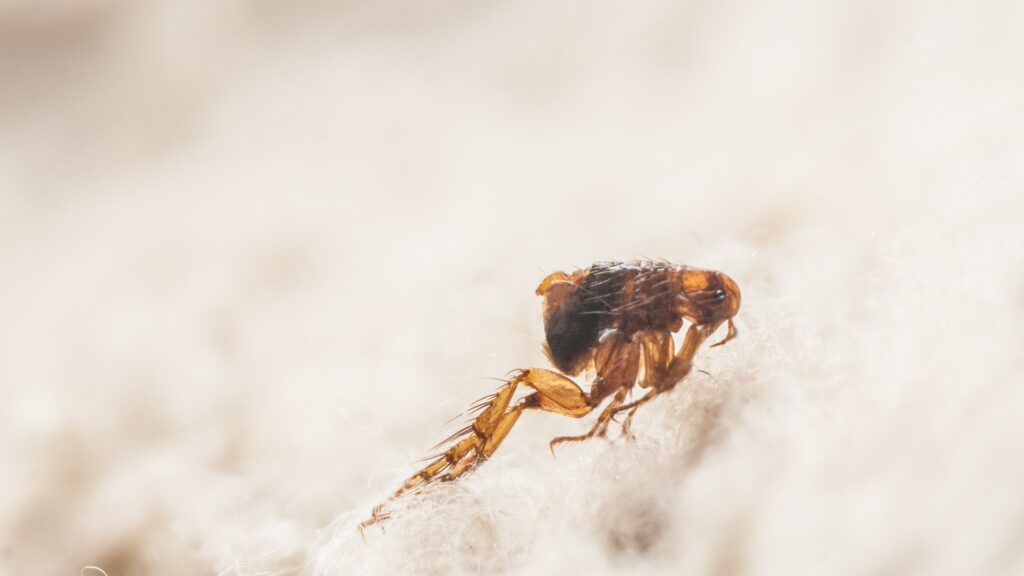
These are reddish-brown and small, but their bodies are compressed side to side rather than top to bottom, giving them a narrower profile. They jump. If a bug leaps when you approach it, cross bed bugs off the list. Flea bites also tend to cluster around the ankles and lower legs rather than on areas exposed during sleep. If you’re seeing fleas in your home you might have a flea infestation. Flea control is different from bed bug control. Call Orange Pest Control and consider our flea control services.
Cockroach Nymphs
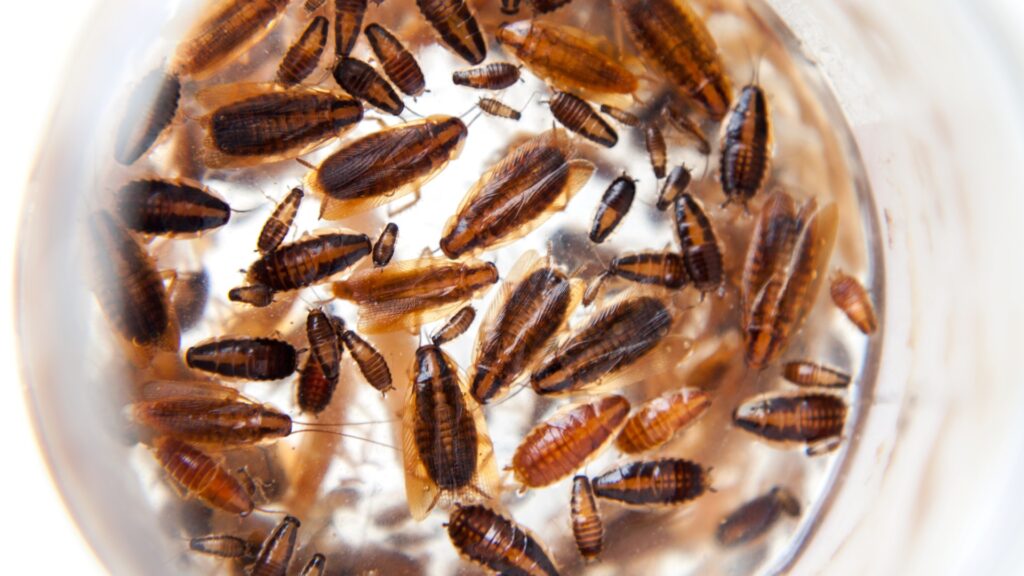
These are a frequent source of confusion. Freshly hatched nymphs are pale, almost white, and small enough to pass for a bed bug at a glance. As they darken to reddish-brown, the resemblance gets stronger.
Body shape is the giveaway: nymphs are more cylindrical with longer antennae, and they scatter fast in all directions. Finding them in the kitchen or bathroom rather than near sleeping areas is a strong indicator you’re dealing with roaches, not bed bugs.
Bat Bugs
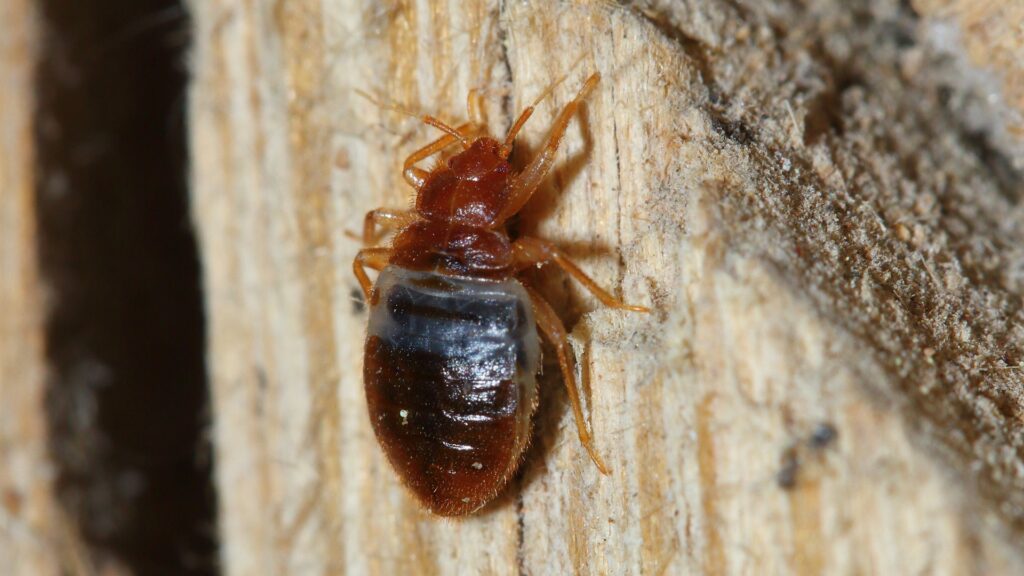
These are arguably the closest lookalike, so close that a microscope is often needed to tell them apart. The distinguishing feature is longer fringe hairs along their bodies. They typically live in attics or wall voids near bat roosts and rarely bite humans unless their bat hosts have left.
Carpet Beetles
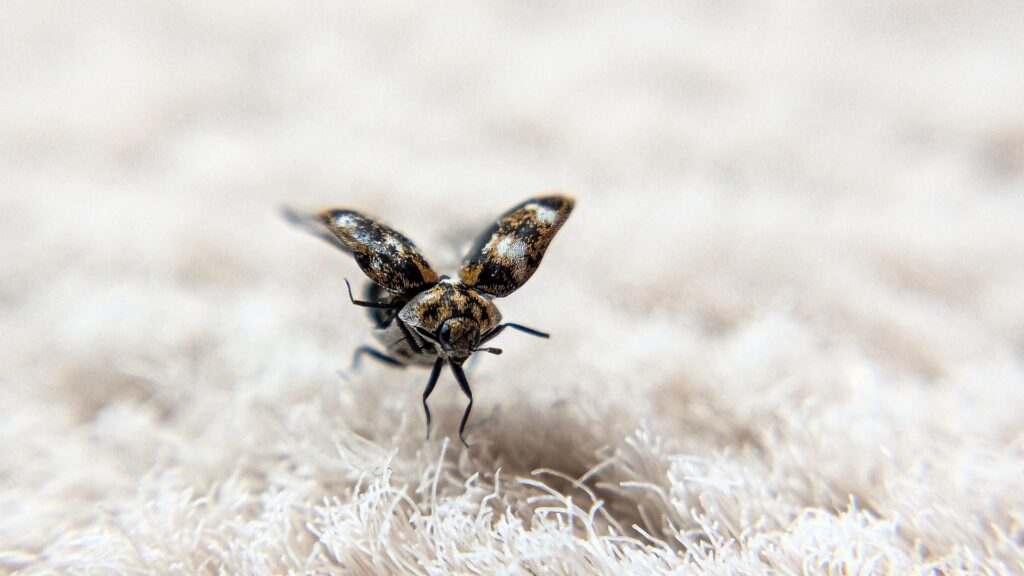
Share the oval body shape but carry a distinct mottled pattern of black, white, and yellow. Unlike bed bugs, they feed on natural fibers, not blood. Their larvae, small and bristly, are often the real source of skin irritation that gets mistaken for bite marks. Carpet beetle infestations can get out of control. If you’re seeing carpet beetles, contact us so we can eliminate the carpet beetles at their source.
Spider Beetles
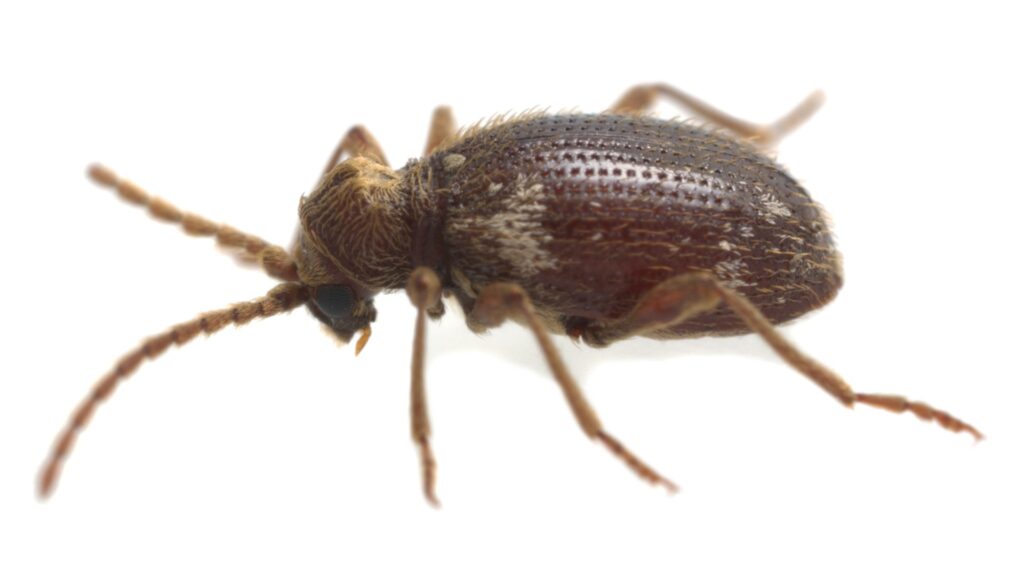
Have a round, shiny abdomen and long legs that make them look like a cross between a spider and a small beetle. They prefer pantries and stored food, so finding them near your bed rather than your kitchen would be unusual.
What Do Bed Bug Eggs and Baby Bed Bugs Look Like?
Bed bug eggs are tiny, about 1mm long, pearl-white, and slightly shiny. They’re laid in clusters and cemented into cracks, seams, and crevices with a sticky secretion that makes them hard to dislodge. Under a magnifying glass, eggs more than five days old show a small dark eye spot.
What baby bed bugs look like is easier to describe: translucent to yellowish-white, similar in shape to adults but much smaller and paler before their first blood meal. After feeding, they turn a brighter red.
Bed bug nymphs go through five molting stages before reaching adulthood, shedding their skin at each stage. Finding shed skins alongside small white eggs in mattress seams is a strong indicator of an active infestation, not just a stray bug passing through.
How to Check for Bed Bugs in Your Home
Checking for bed bugs properly means going beyond the mattress. Strip the bed and inspect every seam, corner, and tag. Check the box spring along the frame edges and any wooden slats. Move the headboard away from the wall and look at the back. Run a credit card along baseboards and watch for dark spotting, shed skins, or live bugs that get pushed out.
Expand the search to nightstands, the inside edges of picture frames, electrical outlet plates, and upholstered furniture nearby. Bed bugs stay close to where people sleep, so they rarely stray far unless a large population pushes overflow into adjacent rooms.
A flashlight and magnifying glass make a real difference, especially when looking for eggs and nymphs that are easy to miss. If you’re finding frass, those small rust-colored or black specks, alongside shed skins but no live bugs, that’s still enough to act on.
Professional bed bug treatment is worth it at that point, before a manageable situation turns into something much harder to clear.
Sleep Easy Again with Orange Pest Control
Misidentifying a bug costs you time, and in Florida’s climate, bed bugs don’t wait around while you figure it out. Orange Pest Control’s team will tell you exactly what’s in your home and handle it from there. Get in touch today and stop guessing.