
Where mosquitoes breed determines how quickly populations explode around your property. Female mosquitoes need water to complete their reproductive cycle, depositing eggs directly on water surfaces or in areas that flood regularly. Even small amounts of stagnant water provide everything mosquitoes need to transform from egg to biting adult within just one week.
Eliminating mosquito breeding grounds on your property cuts populations dramatically since mosquitoes don’t travel far from where they hatch, meaning most bites you receive come from mosquitoes born within a few hundred feet of your home.
Standing Water & Breeding Spots
Mosquito breeding places include any container or depression holding water for more than five days, giving larvae enough time to mature into flying adults.
Clogged gutters rank among the worst offenders since debris traps rainwater that sits stagnant for weeks between cleanings. Flower pot saucers, pet water bowls left outside, birdbaths, and children’s toys collect rainwater that becomes prime breeding habitat within hours of a storm.
Mosquitoes like water as it relates directly to their biological requirements for egg development and larval survival. Mosquito eggs need moisture to hatch, and larvae survive entirely underwater while breathing through specialized tubes that pierce the water’s surface.
Air conditioner drip pans accumulate condensation that provides consistent moisture mosquitoes prefer for breeding. Tarps covering equipment or firewood create pockets where rainwater pools and stays protected from evaporation. Swimming pool covers that sag in the middle trap rainwater above the treated pool water below, creating isolated breeding sites that avoid contact with chlorine.
Storm drains, retention ponds, and decorative water features all support mosquito reproduction unless you implement proper management strategies.
Identifying Mosquito Larvae
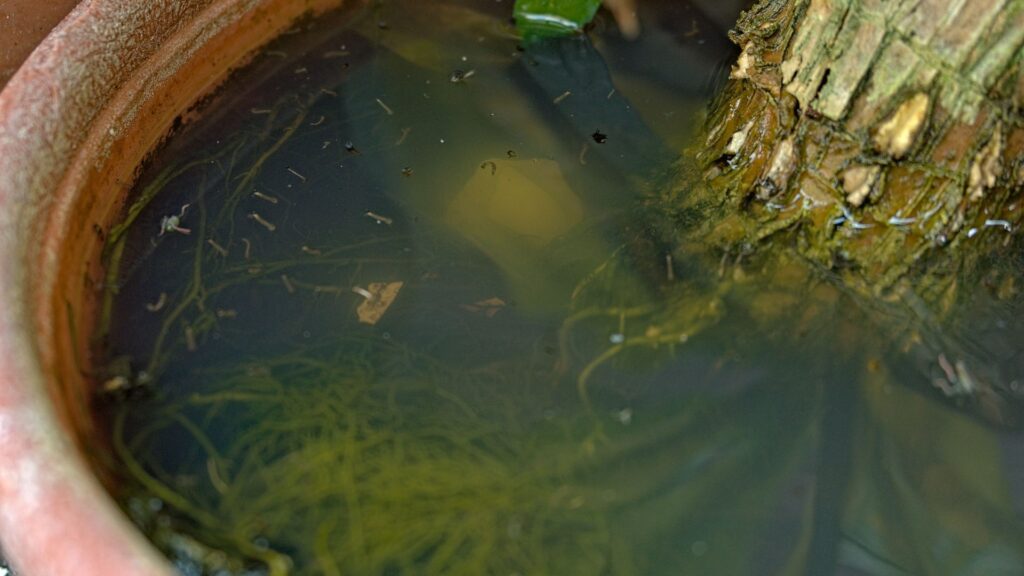
Knowing what mosquito larvae look like in water helps you confirm breeding activity before adult populations surge around your yard.
Larvae appear as small wriggling creatures hanging just below the water surface, moving with distinctive jerky motions when disturbed. Bodies measure about 5-10mm long, depending on their development stage, featuring segmented abdomens and prominent heads visible even without magnification.
Larvae hang at angles from the surface using breathing tubes called siphons, creating the characteristic appearance people describe as “wrigglers.” When you disturb water containing larvae, they dive quickly toward the bottom before slowly floating back up to resume breathing.
Pupae look different from larvae, appearing comma-shaped and tumbling through water rather than hanging from the surface. Pupae don’t feed but simply wait while adult mosquitoes develop inside protective casings. Both larvae and pupae die when you empty standing water, breaking the reproductive cycle before adults emerge and begin seeking blood meals.
Peak Mosquito Season & Life Cycle
Mosquito breeding season in Florida extends year-round, thanks to mild winters that rarely produce freezing temperatures capable of killing mosquito eggs or larvae. Summer months see the highest activity levels as heat accelerates development from egg to adult, with active biting times occurring at dawn and dusk when temperatures drop slightly and humidity rises.
The lifespan of mosquitoes varies by species and environmental conditions, though most female mosquitoes live two to four weeks while males survive only about one week.
Females require blood meals to develop eggs, biting repeatedly throughout their lives and producing multiple egg batches spaced several days apart. Males feed exclusively on plant nectar and never bite humans or animals.
Complete development from egg to flying adult takes seven to ten days under ideal conditions, though cooler temperatures extend this timeline to two or three weeks. Eggs laid during summer hatch within 24-48 hours when temperatures stay warm and water remains available.
Some species lay eggs that survive dry conditions for months, hatching immediately when flooding occurs during heavy rains.
When to Expect More Mosquitoes
Mosquito populations surge within days following heavy rainfall that fills breeding containers and creates temporary puddles across your property.
Hurricane season brings the year’s worst mosquito explosions as flooding creates massive breeding opportunities that overwhelm natural controls. Even brief afternoon thunderstorms typical of Florida summers generate enough standing water to support population increases you’ll notice within a week.
Dawn and dusk activity intensifies during summer months when heat drives mosquitoes to seek cooler air near ground level, where humans spend time outdoors. Some aggressive species bite through clothing when populations grow large enough that competition for blood meals becomes fierce.
Shaded areas around your home harbor more mosquitoes than sunny spaces since direct sunlight desiccates these moisture-dependent insects.
Professional Mosquito Elimination
Mosquito removal services combine source reduction, larvicide applications, and adult mosquito treatments that target populations at multiple life stages simultaneously. Local mosquito abatement programs operated by counties help control breeding in public areas, though private properties require individual attention through professional pest control services.
Mosquito spray companies for yard services apply barrier treatments to vegetation where adult mosquitoes rest during daylight hours between feeding periods. Treatments focus on shrubs, tall grass, underneath decks, and other shaded areas that mosquitoes use as daytime harborage.
Professional-grade products remain effective for three to four weeks, requiring monthly reapplications during peak season to maintain protection.
Larvicide treatments target standing water you can’t eliminate, such as ornamental ponds, drainage ditches, and low-lying areas that flood regularly. Larvicides kill developing mosquitoes before they mature into biting adults, preventing population growth at its source.
Mosquito treatment programs include property inspections, identifying all breeding sites, followed by customized elimination plans addressing your specific problem areas.
Affordable Treatment Pricing
Orange Pest Control offers flexible mosquito management programs designed to eliminate active populations and prevent new breeding throughout the season. Each plan includes a thorough property inspection targeting standing water and harborage areas, followed by regular barrier treatments that keep mosquito activity under control before it disrupts your outdoor living.
Mosquito Control Plans:
- Home Protection – Starting at $40/month with an initial fee (save $50 with current promotions). Protects against mosquitoes and 20+ other common household pests.
- Home Protection Plus – Starting at $49/month. Includes mosquito protection plus year-round termite monitoring, addressing pests that often share similar moisture-prone environments around your property.
- Home Protection Elite – Starting at $59/month. Complete protection against mosquitoes, termites, and rodents for comprehensive year-round coverage.
All programs include free service calls between scheduled visits if mosquito activity returns, maintaining protective barriers around your yard and providing guaranteed re-treatment without additional charges.
Contact Orange Pest Control for effective mosquito management that lets you enjoy your outdoor spaces without constant swatting and itching from bites. Our trained technicians eliminate breeding sites and apply proven treatments that reduce mosquito populations around your home.