
A palmetto bug is a cockroach. The term is a regional nickname used throughout Florida and the Southeast for the American cockroach and Smokybrown cockroach, both large, outdoor-preferring species that come inside through gaps around pipes, drains, and doors.
If you grew up in Florida, you know the drill. Someone spots a large brown bug running across the floor, and half the room calls it a palmetto bug while the other half calls it a cockroach. Both are right.
The Palmetto bug is a southern nickname for a specific roach species that thrives in Florida’s climate. Knowing that changes how you identify what you’re seeing and how you respond to it.
Are Palmetto Bugs the Same as Cockroaches?
Yes. A palmetto bug is a cockroach. The term isn’t a scientific classification. It’s a regional nickname used throughout the Southeast, particularly in Florida, Georgia, and the Carolinas.
When Floridians say palmetto bug, they almost always mean the American cockroach (Periplaneta americana) or the Smokybrown cockroach. Both species thrive in warm, humid environments and show up in and around Florida homes year-round.
The nickname probably stuck because calling something a palmetto bug sounds a lot less alarming than calling it a cockroach. Whatever you call it, the biology, behavior, and treatment are identical. A palmetto bug infestation is a cockroach infestation.
Which Species Get Called Palmetto Bugs?
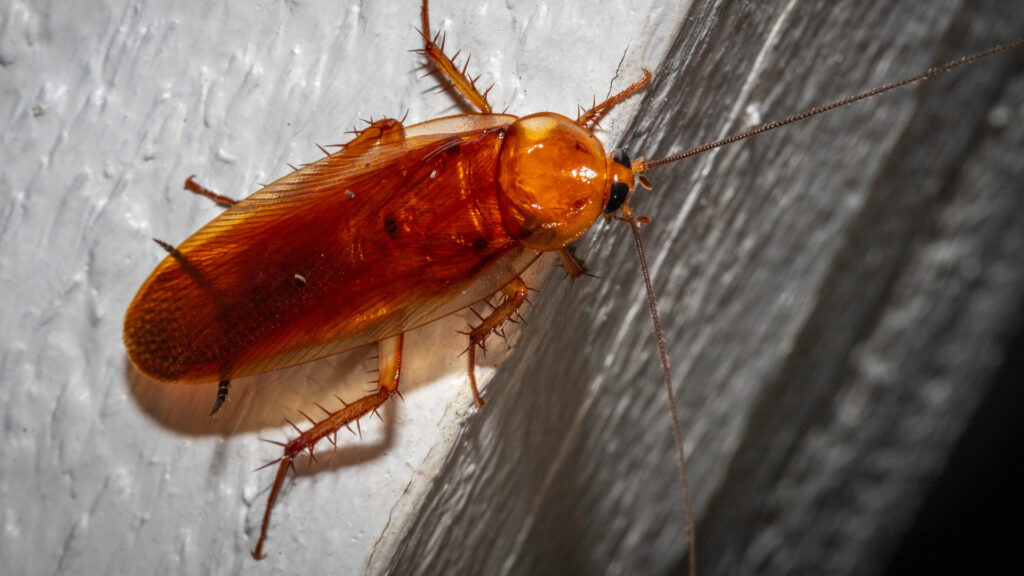
Most of the time, when a Floridian says palmetto bug, they mean an American cockroach. Adults reach one and a half to two inches long, reddish-brown, with a yellowish figure-eight marking behind the head. They have wings. Most of them can fly, but they almost never use them indoors. They prefer to run, and they’re fast.
Smokybrown cockroaches carry the palmetto bug name, too. They run slightly smaller than American roaches, solid dark mahogany brown with no markings. Unlike American roaches, Smokybrowns will fly. They’re common in tree canopies, wood piles, and around outdoor lighting. They come inside when conditions drive them in: heat, drought, or heavy rain.
How Are Palmetto Bugs Different?
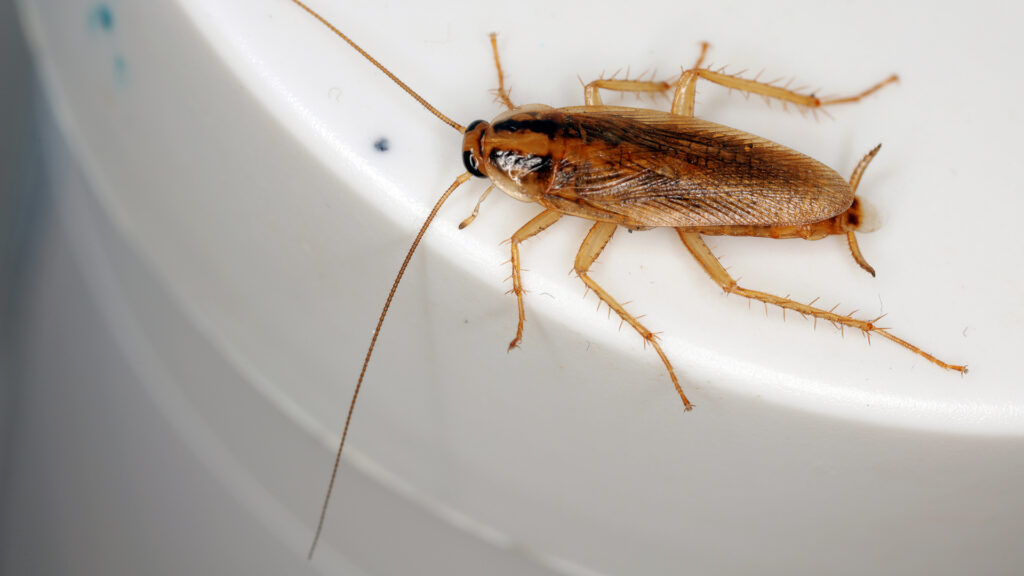
German cockroaches live inside. Palmetto bugs don’t, at least not by preference. German cockroaches (the small, light-brown roaches with two dark stripes) breed and live entirely inside homes. The difference between a German and an American cockroach runs deeper than size. They live in different parts of the home and need different treatment.
Palmetto bugs primarily live outdoors. They come inside when they find a way in, usually through gaps around pipes, vents, and foundations, but they don’t establish indoor colonies the way German roaches do.
One thing most people don’t know is that some palmetto bugs can spray a foul-smelling chemical when threatened. American cockroaches and Smokybrown cockroaches are among the species sometimes called Florida stinkroaches for this reason. It happens when the insect is handled or cornered, though it’s uncommon.
Are Palmetto Bugs Bigger Than Roaches?
An American cockroach regularly reaches two inches. A German cockroach tops out around half an inch. Walking into a room and seeing a two-inch roach running across the floor is a different experience from finding small roaches clustered near the stove. Both are cockroaches. The size gap is what catches people off guard.
Size alone doesn’t tell the whole story, though. A single large American cockroach coming in from outside is a different problem from a German cockroach infestation that’s been breeding in your kitchen for weeks. Both need to be addressed, but the approach is different.
If you’re occasionally seeing large roaches near exterior doors or drains, that points to palmetto bugs. If you’re seeing small roaches in numbers, especially in the kitchen, that’s a German roach situation.
How Do You Get Rid of Palmetto Bugs?
Getting rid of palmetto bugs starts with cutting off what draws them in. Moisture is the main driver. Fix leaky pipes and address standing water around the foundation. Make sure gutters aren’t channeling water toward the house.
Outdoor lighting draws Smokybrown cockroaches specifically. Switching to yellow bug light bulbs outside reduces that pull. Keep mulch pulled back from the foundation. Deep mulch right against the house gives outdoor roach populations a place to build up before finding a way in.
For active indoor sightings, a slow-acting bait gel placed near drains and under sinks works well. A boric acid powder treatment in spaces inside the walls and under appliances adds a second layer.
A single palmetto bug inside doesn’t always mean an infestation. It may have wandered in through a gap. But if you’re seeing them regularly, the entry points need to be found and sealed, and the outdoor population near the home addressed.
How Do Palmetto Bugs Get Into Your Home?
Pipe gaps where lines enter the wall are a primary entry point. American cockroaches can squeeze through a gap as small as a quarter inch. They flatten themselves and push through openings that look too small to matter.
Drains are another route, especially floor drains and rarely used sink drains without a full water trap. Worn weatherstripping (the seal along the bottom of exterior doors), foundation cracks, and openings where air conditioner lines enter the wall all let them in, too.
Sealing those gaps with caulk, expanding foam, or steel wool around pipes makes a real difference. No seal is perfect. But fewer easy entry points mean roaches have to work harder to get in, and treatment holds longer when the outside pressure is reduced.
The most common causes of cockroaches getting inside come down to moisture, gaps, and food access. The same factors bring palmetto bugs in.
Call Orange Pest for Roach Control
Cockroaches in Florida come in more than one species, and knowing which you have determines the treatment.
If you’re seeing large roaches coming in from outside or small ones in the kitchen, we can identify what you have and treat it the right way.
Call us at 321-340-3205 to schedule an inspection. We serve Brevard County and the surrounding areas with roach control built around the species that actually show up in Florida homes.
We proudly serve homeowners across:
• Viera
• Palm Bay
FAQ
What is the difference between a palmetto bug and a cockroach?
There is no difference. A palmetto bug is a regional nickname for certain cockroach species, primarily the American cockroach and the Smokybrown cockroach. Both are common in Florida.
Are palmetto bugs dangerous?
Palmetto bugs can carry bacteria such as Salmonella and spread bacteria and germs by moving through contaminated areas and onto food preparation surfaces. Their shed skins and droppings can also trigger allergies and asthma. They carry real health risks even if they don’t sting or bite. Cockroaches carry bacteria that contaminate food surfaces and trigger asthma in some people.
Why do palmetto bugs come inside?
Palmetto bugs come inside when driven by heat, drought, heavy rain, or when they find an easy entry point near food or moisture. They’re outdoor insects that move inside when conditions become extreme or when the interior offers a reliable food or water source.
How do I keep palmetto bugs out of my Florida home?
Seal gaps around pipes and foundations, fix moisture sources, pull mulch back from the house, and switch exterior lights to yellow bug bulbs. For persistent problems, call us at 321-340-3205 for a professional inspection and treatment.