
Indialantic sits right on the barrier island between the Banana River and the Atlantic Ocean. That location offers many things that make it a great place to live, but the humidity, salt air, and proximity to water also create conditions that drive pest activity.
Homeowners here run into a specific set of problems that show up more consistently than in inland parts of Brevard County. If you’ve moved here from somewhere drier and you’re surprised by how persistent the pest pressure is, the environment is why.
Pests Indialantic Homes See Most
Indialantic has the same pests as the rest of Brevard. The coastal conditions here just give those pests more to work with. Salt-tolerant vegetation, moisture from ocean air, and the drainage patterns around a narrow island all create harborage and entry conditions that keep pest pressure higher than most homeowners expect when they first move in.
Coastal Conditions Drive Activity
A few factors specific to Indialantic that drive pest activity year-round:
- Constant humidity from ocean air keeps moisture levels high in spaces inside the walls and crawl spaces
- Salt-tolerant ground cover and vegetation provide dense hiding spots close to the home’s base
- Irrigation systems and drainage from the Banana River side keep the soil moist through dry stretches
- Barrier island construction often means older concrete foundations with more entry points than newer builds
Homes within a few blocks of the beach see the most consistent pressure, but the conditions that drive it extend across the whole island. Roaches, ants, and spiders all exploit the same moisture conditions, each in different ways.
Bed Bugs in Indialantic Homes
Bed bugs don’t come from the environment outside. They arrive with people, on luggage, with used furniture, or through connected units in multi-family buildings. Indialantic’s mix of vacation rentals, seasonal residents, and proximity to tourism traffic on the barrier island makes introductions more common here than in purely residential inland communities.
High tenant turnover in rental properties is the biggest driver, and bed bugs move between units in ways that make a single-unit treatment pointless if the source isn’t identified first.
Signs You Have a Problem
The signs most homeowners notice first:
- Small rust-colored stains on mattress seams or sheet corners
- Tiny dark spots along baseboards or behind headboards
- Itchy welts appearing in clusters or lines, usually on exposed skin during sleep
- A faint, musty odor in a bedroom that wasn’t there before
Most people don’t know they have bed bugs until the population has been growing for weeks. By the time the staining and odor become noticeable, you’re dealing with a well-established infestation rather than an early one. Catching it early matters here, and our bed bug treatment process targets all life stages, not just the adults that are easiest to see.
Catching it early matters here, and our bed bug treatment process targets all life stages, not just the adults that are easiest to see.
Ant and Spider Pressure Here
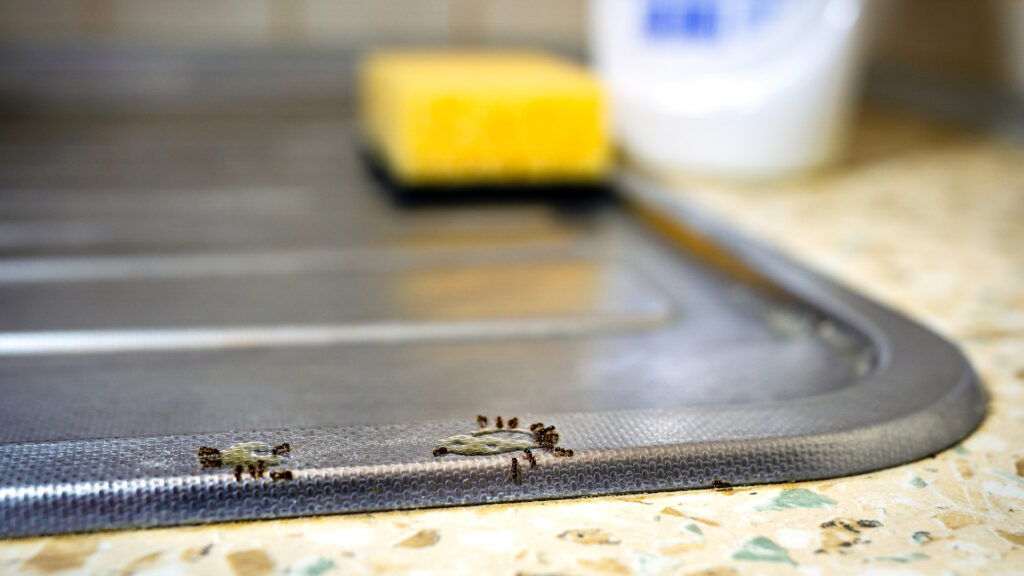
Ghost ants and white-footed ants are the species we see most often inside Indialantic homes. Both are small enough to get through gaps that wouldn’t stop larger ants, and both trail from outside vegetation directly to food sources inside.
Indialantic’s coastal humidity keeps them active through most of the year in ways that homeowners coming from drier climates don’t expect. A spring or summer without meaningful ant pressure isn’t something most Indialantic homeowners have experienced without professional help.
Why Indialantic Sees Both
Store-bought products struggle with ghost ants because the colony structure defeats them. Multiple queens spread across multiple connected nests spread across the property mean that treating one trail only redirects activity elsewhere. Workers get knocked back, the queens keep right on producing, and the population is back within days.
Spiders move in behind them. A home with active ant pressure is a food source, and spiders don’t pass that up. Both problems show up together regularly enough that treating one without the other rarely produces lasting results.
What Our Treatment Covers
Interior spray alone doesn’t cut it for coastal homes here. For Indialantic properties, we address the foundation perimeter, the vegetation immediately around the home, entry points at the roofline and utility penetrations, and the interior harborage areas where pests are already active.
The reinfestation cycle is short when exterior conditions are left untreated. Homeowners end up calling for service repeatedly without getting ahead of it. Working the outside breaks that cycle.
Interior and Exterior Service
What a complete treatment covers:
- Interior perimeter treatment along baseboards, entry points, and spots where pests are active
- Exterior spray treatment along the foundation and vegetation line
- Bed bug treatment using heat, chemical, or a combination, depending on how established the infestation is
- Entry point identification and sealing recommendations to cut down on future pressure
We serve Indialantic as part of our broader Brevard County service area and understand the specific pest conditions the barrier island creates better than a company that doesn’t work here regularly.
Why Local Experience Matters
Product choice and application frequency both matter, and where you treat needs to account for the coastal environment, not just the pest you’re targeting. A treatment schedule built for a Melbourne or Viera home isn’t appropriate for a barrier island property.
Product choice and application frequency both matter, and where you treat needs to account for the coastal environment, not just the pest you’re targeting. We’ve worked in coastal Brevard communities long enough to know which products and application methods hold up against the conditions Indialantic actually throws at them.
Get Pest Control in Indialantic
If pests are becoming a recurring problem in your Indialantic home, the coastal environment won’t make it easier to manage them on your own. Call us at 321-340-3205 or request a free quote to schedule a full property pest control inspection.