
Most spider bites in Florida turn out to be something else entirely. A skin reaction, a bug bite from something smaller, or a skin reaction from a plant or cleaning product. Spiders rarely bite unless they’re pressed directly against skin, and even then, many species can’t break the surface.
That said, Florida does have venomous spiders, and knowing how to tell a genuine spider bite from a look-alike situation matters when symptoms develop in ways that don’t match a typical bug bite.
How to ID a Spider Bite
There’s no reliable way to confirm a spider bite just by looking at the mark. Most bites show up as a red, raised welt with mild swelling, which looks nearly identical to a mosquito bite, a fire ant sting, or a contact reaction. The difference tends to show up in what happens next.
Spider bites can develop more slowly than other insect bites, sometimes not becoming noticeable until hours after contact, and the area around the bite may show more pronounced swelling or discoloration than you’d expect from a typical sting.
Common Bite Patterns in FL
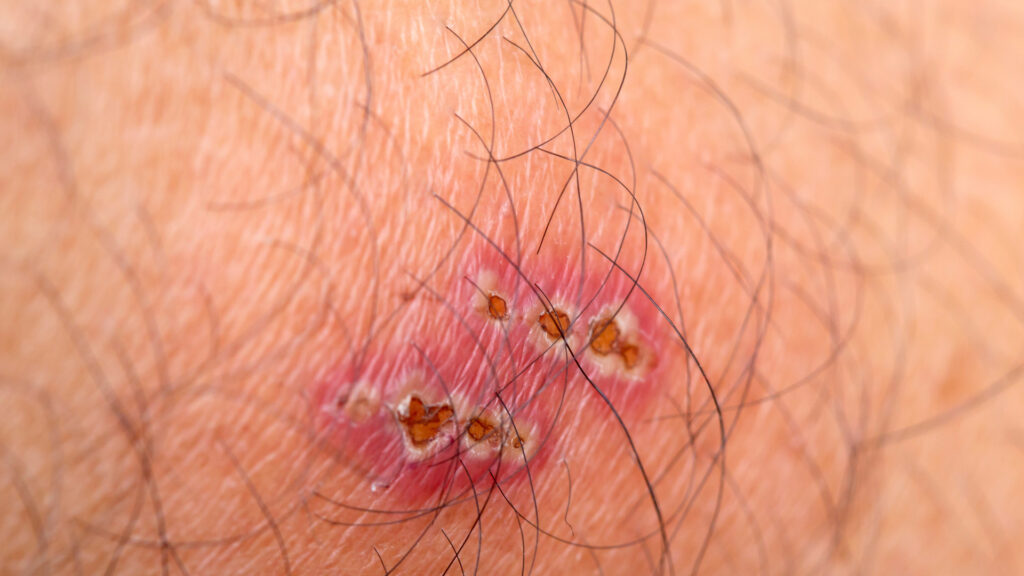
Florida’s climate supports a wide variety of spider species, and the patterns vary by type. Brown recluse bites are known for developing a pale, sunken center surrounded by a red ring, sometimes described as a bullseye appearance.
Black widow bites often leave two small puncture marks and cause symptoms that spread quickly beyond the bite site. Most other spider bites in Florida cause only mild local irritation with no distinctive pattern, which is part of why misidentification is so common.
Spider Bite Symptoms to Watch
The reaction you’re having isn’t always proportional to how bad the bite actually is. Non-venomous bites can itch and swell enough to feel alarming, while some venomous bites show almost nothing on the surface for the first day. What matters is the trajectory.
A bite that’s still changing at 24 or 48 hours, or one that’s spreading rather than settling down, needs attention regardless of how it looked initially.
When Swelling Gets Serious
Symptoms that move beyond the immediate bite area are worth tracking closely:
● Redness or swelling spreading outward over several hours
● A blister forming at the bite site, especially one with a dark center
● Fever, chills, or body aches developing within 24 hours
● Nausea or muscle cramping, particularly in the torso or legs
The muscle cramping and abdominal pain that can follow a black widow bite are distinct enough that most people who’ve experienced it describe it as unlike anything else. If that pattern shows up, that’s an emergency room situation, not a home treatment one.
Venomous Spiders in Florida
Florida has two spider species that are genuinely dangerous: the black widow and the brown recluse. Both are present in Brevard County. Neither one is rare. They don’t go looking for people, but they do end up in spaces where people reach, step, and grab things without looking, which is where most bites actually happen.
Black Widow vs Brown Recluse
Black widows are easier to identify. The female’s glossy black body and red hourglass marking on the underside of the abdomen are distinctive.
They build irregular, messy webs low to the ground and favor dark, undisturbed spaces such as garages, woodpiles, and the undersides of outdoor furniture. Their venom affects the nervous system. A serious bite spreads symptoms through your whole body fast, often within the hour.
Brown recluses are harder to spot. They’re tan to light brown, about the size of a quarter, including legs, and the violin-shaped marking on their back is the most reliable identifier, though it takes a close look to see it clearly. They don’t build webs to catch prey. They hunt.
They shelter in undisturbed clutter, cardboard boxes, closets, and inside clothing or shoes left sitting for a while. Their venom destroys tissue at the bite site. That’s what produces the ulcerating wound brown recluse bites are known for, and the damage can look minor for the first day or two before it becomes obvious.
Treating a Spider Bite at Home
Soap, water, and a cold compress are all you need to start for any spider bite where symptoms stay local and mild.
What Actually Helps
Steps that make a real difference:
● Wash the area with soap and water right away
● Apply a cold compress for 10 minutes at a time to bring down swelling
● Keep the bite elevated if it’s on a limb to help reduce swelling
Over-the-counter antihistamines help with itching and mild swelling
Don’t try to cut or squeeze the bite site. That doesn’t remove the venom and significantly raises the risk of infection. If you caught the spider and can bring it with you safely, that information helps whoever treats you narrow down what you’re dealing with faster.
When to Call a Professional
If symptoms point toward a venomous bite, skip home treatment and go directly to a medical provider. Any bite that starts spreading, darkening, or developing a blister with a sunken center after 24 to 48 hours should be examined before it progresses. Brown recluse bites in particular can appear minor for the first couple of days before the tissue damage becomes visible.
Finding a black widow or brown recluse in a garage or closet isn’t a fluke. It’s a sign that conditions around the home are supporting a population, and that population doesn’t stay small on its own.
We cover spider control across Satellite Beach and Brevard County, including identification, targeted treatment, and exclusion work that seals off the entry points and hiding spots spiders use to establish themselves indoors.
If you’re seeing them regularly, or you’ve spotted something that looks like either of these species, that’s worth having us come out and take a look at before the population grows.
Schedule Spider Control Today
Finding venomous spiders in or around your Satellite Beach home isn’t something to wait out. Call us at 321-340-3205 or request a free quote to schedule a spider control inspection in Satellite Beach.