
By May, a wasp colony that started with a single overwintering queen has grown into something worth taking seriously. That golf ball-sized paper structure under an eave, or the cluster of gray comb near the fence line, can hold hundreds of workers by midsummer. All of them sting repeatedly without losing the stinger. A can of hardware store spray doesn’t resolve that cleanly.
If you’ve spotted a nest on your Rockledge property, the question isn’t just where it is. Species matters. So does how large the colony has grown, and whether the location makes safe access possible without professional equipment. Those details come first.
Why Wasp Nest Removal Is Dangerous
Nests look smaller from the outside than they actually are. That gap between what’s visible and what’s actually there is what catches most people off guard. Yellow jackets build in locations that hide the full structure — a nest inside a wall void or buried underground can look unremarkable from the surface, and by the time you’re close enough to apply a spray, you’re close enough to trigger a defensive response from the full colony.
The first thing that changes when a professional handles a removal is the order of operations. Species identification and full nest location come before any treatment decision. That sequence shapes everything — which products are used, when the visit happens, and how the nest is safely accessed. Working without that groundwork means guessing, and stinging insects don’t forgive guessing.
What Happens When a Nest Is Disturbed
Wasps don’t sting as a first response. They sting when they read a threat. Directing a spray can at a nest activates every worker within range, and that range is larger than most people expect. Yellow jacket colonies can pursue a threat 50 to 100 feet from the nest. Paper wasps are less reactive, but they’ll still mount a fast, coordinated defense if the nest is touched or damaged.
Timing makes it worse. Mid-afternoon, when foragers are out, a nest looks small and quiet. By evening, when the full colony has returned, that same nest holds considerably more activity. Most DIY attempts happen in the afternoon for that reason, and many don’t go as planned.
Wasps Common in Rockledge Yards
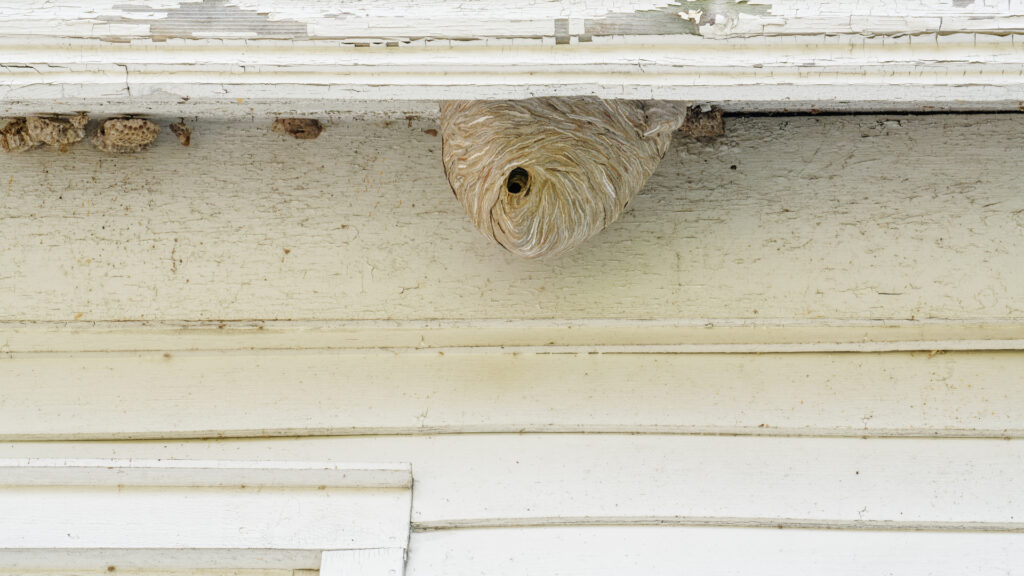
Not every stinging insect you’ll encounter in a Rockledge yard behaves the same way or nests in the same places. Knowing which species you’re dealing with changes how a removal should be approached:
- Yellow jackets: ground or wall void nests, highly aggressive defenders
- Paper wasps: open umbrella-shaped nests under eaves, moderate risk
- Bald-faced hornets: large enclosed nests in trees or dense shrubs
- Mud daubers: small clay tube nests, solitary and rarely a sting hazard
From May through August, yellow jackets and paper wasps are in peak colony growth across Brevard County. That’s when the majority of stinging insect calls come in, and it’s when nests that went unnoticed in early spring become problems that are harder to ignore.
If you want to understand what drives wasp activity during Brevard County’s warmer months, our guide on when wasps are most active covers the seasonal patterns worth knowing.
Yellow Jackets vs. Paper Wasps
What separates these two species isn’t just appearance. It’s how they respond when threatened. Yellow jackets frequently build nests in locations you don’t see until you’re already close. You may not realize you’ve disturbed one until the colony reacts, and their response is faster and wider-ranging than most people anticipate.
Unlike yellow jackets, paper wasps build nests you can actually see, and they’re generally calmer unless the nest is handled or damaged directly. Even so, a paper wasp nest near a door or walkway carries real risk, especially for anyone with a known allergy to insect stings. Getting a positive species identification is a practical first step before doing anything else. Our guide to wasp species in Florida covers the full range of stinging insects common to Brevard County.
How We Remove Wasp Nests Safely
Before anything is applied, we confirm the species and locate the full nest structure. What we find determines everything else. A yellow jacket nest inside a wall void requires a different method than an exposed paper wasp nest on a fence post or under a roofline, and skipping that step means treating the wrong problem.
Evening is the practical time for most nest removals, when foragers have returned and the colony is at its least active. We apply a licensed insecticide directly at the entry points and throughout the nest structure, reaching the interior of the colony rather than just the workers that emerge to defend. After the colony is neutralized, we remove the nest to prevent other insects from moving into that same space later in the season.
What to Expect During Treatment
An hour is usually enough time to handle a residential wasp removal. You don’t need to leave your home, but staying indoors with pets during treatment and for a short window afterward is the practical call. Before we leave, we’ll walk you through what we found and what we treated. If there are other nest locations on the property or conditions that could support another colony before the season ends, we’ll flag those.
If you’re seeing stinging insect or general pest activity across more than one part of your property, a single visit can cover the full assessment rather than scheduling around multiple problems separately.
Get Wasp Control in Rockledge
A nest that looks manageable in May is a considerably harder situation by July. Colonies in Brevard County’s summer heat grow fast, and by peak season they’re defending aggressively against anything that gets close. The earlier in the season a removal happens, the simpler it tends to be.
Call our team at 321-340-3205 or visit our contact page to schedule a free estimate. We provide pest control in Rockledge and the surrounding communities throughout Brevard County:
- Rockledge
- Cocoa Beach
- Palm Bay
- Melbourne
- Satellite Beach
- Viera
- St. Cloud