
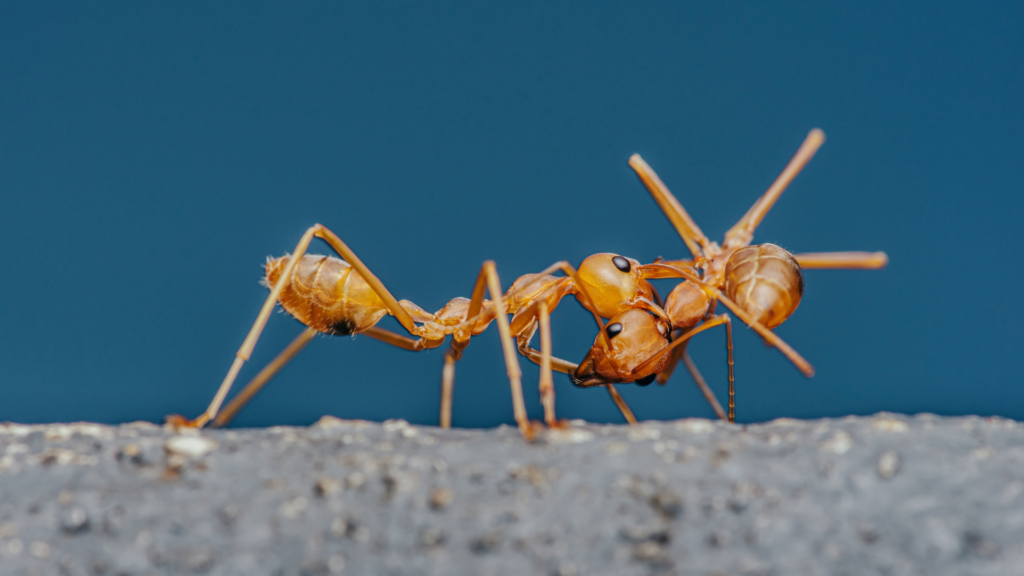
Ants might just be some of the most fascinating creatures in nature. Despite their tiny size, they live in highly organized societies with well-defined roles and behaviors that can seem downright alien to us. One behavior that often catches people’s attention is when ants carry their dead counterparts. Have you noticed this in your yard or home and wondered, “Why do ants carry dead ants? How morbid is that!”
While many might chalk it up to instinct, the truth is a bit more intricate, and understanding it can give you a new appreciation for these industrious insects. At the same time, fascination only goes so far when ants decide to invade your home or outdoor spaces. If you’re in Brevard County, we’re here at Orange Pest Control to help handle these unwanted guests in a professional and effective way.
In this guide, we will explore the science behind this strange funeral rite, what it signals about the colony nearby, and why keeping your home ant-free is critical for your peace of mind.
Why Do Ants Carry Dead Ants?
Ants live in colonies where survival depends on teamwork, efficiency, and cleanliness. If you’ve seen ants carrying their dead, you’re witnessing part of their colony’s maintenance strategy. This behavior, formally known as necrophoresis, is a natural response ingrained into the ant’s life cycle.
When an ant dies, its body starts to decompose, releasing a chemical called oleic acid. To living ants, this chemical acts like an alarm bell signaling that the body needs to be removed immediately. Removing the dead keeps the colony clean and helps prevent the spread of disease caused by microbes or harmful bacteria that could thrive on a decaying ant. In the tight, crowded tunnels of an ant hill, hygiene is a matter of life and death for the entire population.
The deceased ant is often carried to what we call a “midden,” essentially the insect version of a cemetery or garbage dump. Middens serve as designated areas for waste within the colony and contain other debris, like discarded food or leftover nesting materials. Think of them as nature’s way of taking out the trash.
It is fascinating in its intricacy—ants can sense chemical changes in their environment so accurately that they know exactly when one of their kin has died and where to bring them. It ensures that pathogens don’t wipe out the queen or the developing larvae, securing the future of the colony.
The Role of Ants’ Complex Communication Systems
Ants rely on chemical signals, also known as pheromones, to communicate with one another. These signals direct everything they do, from finding food to defending the colony, and yes, carrying away their fallen comrades.
When a dead ant releases the oleic acid, living ants detect this cue and spring into action. Without this chemical, the dead ant might go unnoticed by the colony. Interestingly, studies have shown that applying oleic acid to a living ant can cause its companions to mistakenly carry it to the midden, highlighting how programmed this behavior is. The living ant may kick and struggle, but the chemical signal overrides the visual evidence that the ant is still alive.
This method of communication ensures that the colony functions smoothly, with every member playing a role in maintaining survival. It’s efficient, but if you’re seeing this behavior in your yard or worse, inside your home, it might also indicate an infestation that needs addressing sooner rather than later.
What Does This Behavior Mean for You?
While the behavior of ants is undeniably fascinating, their presence in your home is far from desirable. When you spot ants carrying their dead, it is usually a sign of a growing colony nearby. One or two ants may not seem like a big deal, but colonies can grow fast, especially when they find ample food sources, water, or a warm nesting environment inside your spaces.
Seeing necrophoresis in action essentially confirms that a mature colony is established close enough that they are performing “housekeeping” duties in your vicinity. If they feel comfortable enough to manage their waste near your kitchen or patio, they have likely already set up a satellite nest or a primary foraging route through your property.
How Ant Colonies Expand Over Time
Understanding how ant colonies expand over time is key to realizing why early detection is vital. Most infestations start small, with scout ants searching for resources. Once a food source is identified, they lay down pheromone trails for others to follow. Over time, if resources are plentiful, the colony will grow in population, eventually leading to “budding,” where queens break off to start new sub-colonies. This exponential growth turns a minor nuisance into a structural nightmare if left unchecked.
Why Do Ants Invade Homes?
Ants are opportunistic survivors. They don’t invade homes out of malice; they do it because your home provides the three things they need most: food, moisture, and shelter.
Why ants invade homes usually comes down to environmental pressures outside. During droughts, they seek water in your bathrooms and kitchens. Conversely, heavy rains can flood their underground nests, forcing them to seek higher, drier ground—often inside your walls.
This is particularly true for ants entering during rain events. When a Florida afternoon downpour saturates the soil, ground-nesting ants are displaced and will rapidly move their eggs and larvae to the nearest dry location. Unfortunately, that dry location is often your lanai, garage, or living room baseboards. Once they are inside, they may decide to stay if they find a steady supply of crumbs or moisture.
Common Ant Infestations in Florida
Living in the Sunshine State means dealing with a unique variety of pests. Florida ant activity patterns are influenced by our warm, humid climate, which allows insects to remain active nearly year-round. Unlike in colder states where winter provides a break from pests, Florida homeowners must be vigilant 12 months a year.
Some of the common ant infestations in Florida include:
- Ghost Ants: Tiny and hard to see, they love sweets and moisture, often appearing on kitchen counters.
- Carpenter Ants: These large ants can cause structural damage by excavating wood for their nests.
- Fire Ants: Known for their painful sting, they build large mounds in yards and can be dangerous to pets and children.
- Bigheaded Ants: These invasive ants create massive “supercolonies” and displace native species, often taking over lawns and gardens.
Each species requires a different approach for effective control, making professional identification crucial.
Prevention Is Better Than Cure—But We’ve Got You Covered Either Way
Don’t wait until your kitchen counter becomes the ants’ grand funereal highway. Preventing infestations is always easier than addressing them after they’ve taken hold. Keeping your home clean of crumbs and available water sources may slow them down, but when colonies are large or deeply embedded, professional intervention is the smarter—and more effective—choice.
At Orange Pest Control, we’re not just here to remove ants; we help keep them from coming back. Brevard County homes and businesses deal with ant infestations frequently due to Florida’s warm, humid climate. That’s why we use targeted treatments that disrupt ant colonies at their source, guaranteeing a more effective and comprehensive removal.
We focus on perimeter protection to create a barrier that stops ants before they enter. We also understand the biology of the specific ant species invading your home. For example, spraying a repellent on certain species like Pharaoh ants can actually make the problem worse by causing the colony to split (budding) into multiple new nests. Our experts know exactly which bait or non-repellent treatment to use to eliminate the queen and collapse the colony.
Tailored Ant Control Solutions for Your Home
Beyond checking for entry points and cleaning thoroughly, the best way to keep invading ants away isn’t a one-size-fits-all solution. Our team offers tailored pest control services to address specific infestations, whether it involves ants, roaches, or other unwelcome pests. We take into account the season, the weather patterns, and the specific architecture of your home to design a defense plan that works.
Call Orange Pest Control for Ant-Free Living in Brevard County
Ants may be small, but they’re mighty in numbers—and they certainly aren’t clueless in navigating your homes or gardens. The next time you see a train of ants carrying away their fallen, you’ll know it’s part of their intricate survival system. It is a reminder of how complex their world is, but also a warning sign that their world is encroaching on yours.
While understanding their behavior is no doubt interesting, keeping them out of your home should be a top priority. That’s where we come in.
If you’re dealing with an ant infestation or want to take proactive measures to keep your space pest-free, give Orange Pest Control a call. We have the tools, knowledge, and experience to protect your home and give you peace of mind. Ants may have teamwork down to a science, but when it comes to keeping them at bay, we’re the team you need in Brevard County. Contact us today!
Proudly serving:
Updated 12/29/2025